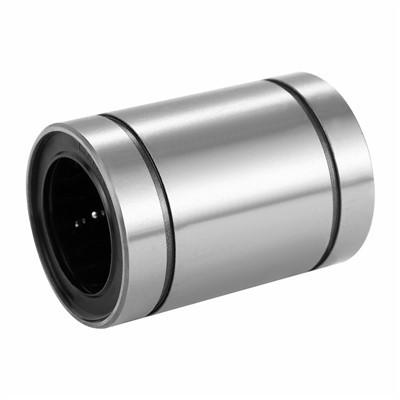
Humidity is an environmental factor that can significantly influence the performance of various mechanical components, and flange linear bearings are no exception. As a leading supplier of flange linear bearings, we have witnessed firsthand the impact of humidity on these precision parts. In this blog, we will delve into the ways humidity affects the performance of flange linear bearings and discuss strategies to mitigate these effects.
Corrosion and Rust Formation
One of the most prominent impacts of humidity on flange linear bearings is the increased risk of corrosion and rust formation. When the relative humidity in the environment rises above a certain level, typically around 60%, water vapor can condense on the surface of the bearing. This condensed water acts as an electrolyte, facilitating the electrochemical reactions that lead to corrosion.
Flange linear bearings are often made of metals such as steel or stainless steel. While stainless steel is more resistant to corrosion than regular steel, it is not immune. In high - humidity environments, even stainless steel bearings can develop surface rust over time. Rust not only affects the aesthetic appearance of the bearing but also compromises its structural integrity. As rust spreads, it can cause pitting on the bearing surface, which in turn can lead to increased friction and wear.
For example, in a coastal area where the humidity is consistently high, a flange linear bearing used in a marine application may experience accelerated corrosion. The salt in the air can also act as a catalyst, further speeding up the corrosion process. This can result in premature failure of the bearing, leading to costly downtime and replacement.
To illustrate the variety of flange linear bearings we offer, you can explore our LMK20UU Stainless Steel bearing. This bearing is made of high - quality stainless steel, which provides a certain level of protection against corrosion. However, in extremely humid conditions, additional protective measures may still be necessary.
Lubrication Degradation
Humidity can also have a negative impact on the lubrication of flange linear bearings. Most bearings rely on lubricants to reduce friction and wear between moving parts. However, high humidity can cause the lubricant to break down more quickly.
Water vapor can mix with the lubricant, forming an emulsion. This emulsion can reduce the lubricant's ability to form a protective film between the bearing surfaces. As a result, the friction between the bearing and the shaft increases, leading to higher operating temperatures and more rapid wear.
In addition, some lubricants are hygroscopic, meaning they absorb water from the air. When a lubricant absorbs too much water, its viscosity can change, and it may lose its lubricating properties. This can cause the bearing to operate less smoothly and can even lead to seizure in severe cases.
Our Flange Linear Bearing LMF20LUU comes pre - lubricated with a high - quality lubricant. But in humid environments, it is important to monitor the lubrication condition regularly and re - lubricate as needed. We recommend using lubricants that are specifically designed to resist water and humidity.
Dimensional Changes
Another effect of humidity on flange linear bearings is dimensional changes. Materials expand and contract with changes in temperature and humidity. When the humidity increases, the bearing material may absorb moisture, causing it to swell. This can lead to changes in the bearing's internal clearance and fit.
If the bearing swells too much, it can cause interference with the mating parts, such as the shaft or the housing. This can result in increased stress on the bearing, which can lead to premature failure. On the other hand, if the humidity decreases and the bearing material dries out, it may shrink, causing the internal clearance to increase. This can lead to increased vibration and noise during operation.
For instance, in a manufacturing facility where the humidity is not well - controlled, the dimensional changes of the flange linear bearings can affect the accuracy of the machinery. This can be particularly problematic in precision applications, such as in the semiconductor industry or in high - speed machining.


Our LMF20LUU Nickel Plating bearing has a nickel - plated surface, which can help to reduce the impact of humidity - induced dimensional changes. The nickel plating provides a barrier that can slow down the absorption of moisture by the bearing material.
Mitigating the Impact of Humidity
To minimize the impact of humidity on flange linear bearings, several strategies can be employed.
Environmental Control
One of the most effective ways is to control the environment in which the bearings operate. This can be achieved by using dehumidifiers in enclosed spaces. Dehumidifiers can reduce the relative humidity to a level where the risk of corrosion and lubrication degradation is minimized. In addition, proper ventilation can also help to remove moisture from the air.
Protective Coatings
Applying protective coatings to the bearing surface can provide an additional layer of protection against corrosion. Coatings such as zinc plating, nickel plating, or epoxy coatings can act as a barrier between the bearing material and the humid environment. These coatings can prevent water vapor from coming into direct contact with the bearing surface, reducing the risk of corrosion.
Lubrication Management
Regularly monitoring and maintaining the lubrication of the bearings is crucial. In humid environments, it may be necessary to use lubricants with better water - resistance properties. Additionally, more frequent lubrication intervals may be required to ensure that the bearing is always properly lubricated.
Material Selection
Choosing the right bearing material is also important. As mentioned earlier, stainless steel bearings are more resistant to corrosion than regular steel bearings. However, there are also other materials available that offer even better corrosion resistance, such as ceramic or plastic bearings. These materials can be a good choice for applications in extremely humid environments.
Conclusion
In conclusion, humidity can have a significant impact on the performance of flange linear bearings. It can cause corrosion, lubrication degradation, and dimensional changes, all of which can lead to premature failure of the bearing. As a supplier of flange linear bearings, we understand the importance of addressing these issues to ensure the reliable operation of our customers' equipment.
By implementing the strategies mentioned above, such as environmental control, protective coatings, lubrication management, and proper material selection, the negative effects of humidity can be minimized. If you are facing challenges related to humidity in your bearing applications, we are here to help. Our team of experts can provide you with customized solutions based on your specific needs.
If you are interested in purchasing high - quality flange linear bearings or need more information about how to protect your bearings from humidity, please feel free to contact us for a detailed discussion. We look forward to working with you to ensure the optimal performance of your machinery.
References
- "Handbook of Lubrication and Tribology, Volume II: Application and Design" by Bhushan, Bharat.
- "Corrosion Science: Principles and Applications" by Roberge, Pierre R.
- "Mechanical Design of Machine Elements and Machines: A Failure - Prevention Perspective" by Spotts, Milton F., Shigley, Joseph E., and Hamrock, Bernard J.