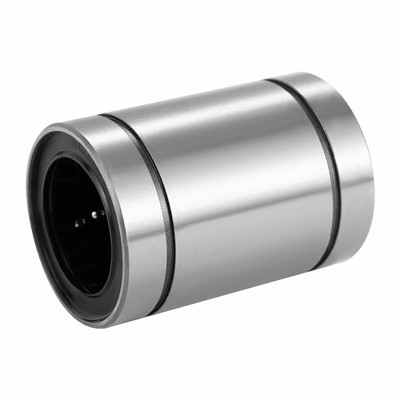
As a supplier of linear bearings, understanding the thermal expansion of these components is crucial. Linear bearings are widely used in various industries, including manufacturing, automation, and robotics. Thermal expansion can significantly affect the performance and lifespan of linear bearings, so it's essential to know how to calculate it accurately.

Understanding Thermal Expansion
Thermal expansion is the tendency of matter to change in volume in response to a change in temperature. When a material is heated, its molecules gain energy and move more vigorously, causing the material to expand. Conversely, when the material is cooled, the molecules lose energy, and the material contracts.
The amount of thermal expansion of a material is determined by its coefficient of thermal expansion (CTE). The CTE is a measure of how much a material expands or contracts per unit length for a given change in temperature. It is usually expressed in units of length per length per degree Celsius (or Fahrenheit).
Factors Affecting Thermal Expansion in Linear Bearings
Several factors can affect the thermal expansion of linear bearings:
- Material: Different materials have different coefficients of thermal expansion. For example, steel has a CTE of approximately 12 x 10^-6 /°C, while aluminum has a CTE of about 23 x 10^-6 /°C. This means that aluminum will expand more than steel for the same change in temperature.
- Temperature Change: The greater the change in temperature, the more the linear bearing will expand or contract. In applications where the temperature fluctuates significantly, it's important to account for thermal expansion to prevent binding or excessive clearance in the bearing.
- Bearing Design: The design of the linear bearing can also affect its thermal expansion. For example, a bearing with a larger cross-sectional area will generally expand more than a bearing with a smaller cross-sectional area.
Calculating the Thermal Expansion of a Linear Bearing
The formula for calculating the thermal expansion of a linear bearing is:
ΔL=α×L×ΔT
Where:
ΔL is the change in length of the bearing.
α is the coefficient of thermal expansion (CTE) of the bearing material.
L is the original length of the bearing.
ΔT is the change in temperature.

Let's take an example to illustrate how to use this formula. Suppose we have a linear bearing made of steel with an original length of 100 mm. The coefficient of thermal expansion of steel is 12 x 10^-6 /°C. If the temperature of the bearing increases by 50°C, we can calculate the change in length as follows:
ΔL = 12 x 10^-6 /°C * 100 mm * 50°C
ΔL = 0.06 mm
This means that the bearing will expand by 0.06 mm due to the temperature increase.
Implications of Thermal Expansion in Linear Bearings
Thermal expansion can have several implications for the performance of linear bearings:
- Clearance Changes: As the bearing expands or contracts, the clearance between the bearing and the shaft or housing can change. If the clearance becomes too small, the bearing may bind, leading to increased friction, wear, and potential failure. On the other hand, if the clearance becomes too large, the bearing may experience excessive play, which can affect the accuracy and stability of the system.
- Preload Changes: In some applications, linear bearings are preloaded to improve their stiffness and accuracy. Thermal expansion can cause the preload to change, which can affect the performance of the bearing. For example, if the bearing expands and the preload increases, the bearing may become too stiff, leading to increased friction and wear.
- Alignment Issues: Thermal expansion can also cause alignment issues in the system. If the bearing expands or contracts unevenly, it can cause the shaft or housing to become misaligned, which can affect the performance and lifespan of the bearing.
Mitigating the Effects of Thermal Expansion
To mitigate the effects of thermal expansion in linear bearings, several strategies can be employed:
- Selecting the Right Material: Choosing a material with a low coefficient of thermal expansion can help reduce the amount of expansion or contraction. For example, ceramic materials have a very low CTE, making them suitable for applications where temperature stability is critical.
- Designing for Thermal Expansion: When designing a system that uses linear bearings, it's important to consider the effects of thermal expansion. This may involve providing additional clearance, using flexible mounts, or designing the system to allow for thermal expansion.
- Monitoring Temperature: Monitoring the temperature of the linear bearings can help detect any potential issues related to thermal expansion. If the temperature exceeds a certain threshold, appropriate measures can be taken to prevent damage to the bearings.
Examples of Linear Bearings and Their Thermal Expansion Considerations
Let's take a look at some specific examples of linear bearings and their thermal expansion considerations:
- LM20UUAJ: This is a popular linear motion bearing with a specific design and material. When using this bearing in an application where temperature changes are significant, it's important to calculate its thermal expansion based on the material's CTE and the expected temperature range.
- Flanged Linear Motion Bearing LMEF20UU: The flanged design of this bearing provides additional stability and support. However, the flange can also affect the thermal expansion characteristics of the bearing. It's important to consider the combined effects of the bearing material and the flange design when calculating thermal expansion.
- LMF20UU Nickel Plating: The nickel plating on this bearing can provide additional corrosion resistance. However, the plating can also affect the thermal expansion properties of the bearing. It's important to take into account the CTE of the nickel plating as well as the base material when calculating thermal expansion.
- Aluminum Box Sliders (e.g., Flanged Units & Linear Guide Assemblies): Many linear systems combine steel bearings with aluminum housings or slider plates (such as standard box units tailored for automation partners like MISUMI or YIHEDA). Since aluminum has a much higher CTE (≈ 23 × 10⁻⁶/°C) than bearing steel (≈ 12 × 10⁻⁶/°C), engineers must carefully calculate the differential expansion between the bearing outer ring and the aluminum housing to prevent loose fits or severe preloading at elevated temperatures.
Conclusion
Calculating the thermal expansion of linear bearings is an important aspect of ensuring their proper performance and longevity. By understanding the factors that affect thermal expansion, using the appropriate formula, and taking steps to mitigate its effects, you can design and operate systems that use linear bearings more effectively.
If you are in the market for high-quality linear bearings and need assistance with understanding thermal expansion or any other technical aspects, we are here to help. Our team of experts can provide you with detailed information and guidance to ensure that you select the right bearings for your application. Contact us to start a procurement discussion and find the best solutions for your needs.
References
- "Mechanical Engineering Design" by Joseph E. Shigley and Charles R. Mischke
- "Materials Science and Engineering: An Introduction" by William D. Callister Jr. and David G. Rethwisch