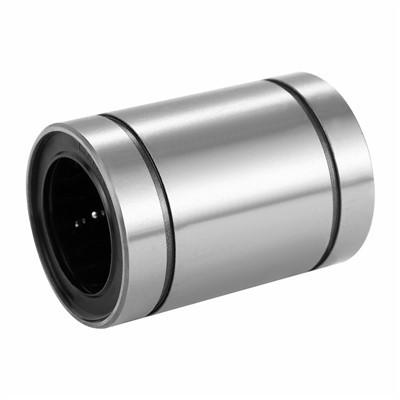
Hey there! As a supplier of LM20LUU, I often get asked about the temperature stability of this product. So, I thought I'd write a blog post to share some insights on this topic.
First off, let's talk about what temperature stability means. In simple terms, it refers to how well a component can maintain its performance and characteristics over a range of temperatures. For the LM20LUU, temperature stability is crucial because it's used in various applications where temperature fluctuations can occur.
The LM20LUU is a linear motion bearing, and like all mechanical components, its performance can be affected by temperature changes. When the temperature rises, materials expand, and when it drops, they contract. These thermal expansions and contractions can lead to changes in the dimensions and clearances of the bearing, which might impact its smooth operation.
One of the key factors that contribute to the temperature stability of the LM20LUU is the material it's made of. Most of these bearings are constructed from high - quality steel or stainless steel. Steel has relatively predictable thermal expansion properties. The coefficient of thermal expansion of steel is in the range of about 10 - 12 × 10⁻⁶ /°C. This means that for every degree Celsius increase in temperature, a steel component will expand by a very small but measurable amount.
For the LM20LUU, the design engineers take this thermal expansion into account during the manufacturing process. They ensure that there is enough clearance within the bearing to accommodate the expansion and contraction that occurs with temperature changes. This way, even if the temperature varies, the bearing can still function properly without getting jammed or experiencing excessive wear.
Let's take a look at some real - world scenarios. In industrial settings, the temperature can vary widely. For example, in a factory where there are large machines generating heat, the ambient temperature can rise significantly during operation. The LM20LUU needs to be able to handle these elevated temperatures. Typically, it can operate effectively in temperatures ranging from - 20°C to 80°C.
At lower temperatures, say around - 20°C, the steel becomes a bit more brittle, but the design of the LM20LUU is such that it can still provide reliable linear motion. The lubrication used in the bearing also plays a role here. Special low - temperature lubricants are often used to ensure that the bearing doesn't seize up due to the increased viscosity of the lubricant at cold temperatures.
On the other hand, at higher temperatures, up to 80°C, the main concern is the expansion of the materials. But as I mentioned earlier, the bearing is designed with enough clearance to handle this. The lubricant also needs to be able to withstand these higher temperatures without breaking down. High - temperature lubricants are used to ensure smooth operation even in hot environments.
Now, let's compare the LM20LUU with some related products. We have the LM20UUAJ and the LM20UU Stainless Steel. The LM20UUAJ might have some differences in its internal design or the type of lubrication used, which could affect its temperature stability slightly. The LM20UU Stainless Steel, as the name suggests, is made of stainless steel. Stainless steel has a slightly different coefficient of thermal expansion compared to regular steel, but it also offers better corrosion resistance, which can be an advantage in some applications where the environment is more corrosive.
Another product in our range is the KH2030PP. This is a different type of linear motion component, and its temperature stability characteristics are also different. It's important to choose the right product based on the specific temperature requirements of your application.
If you're in an application where temperature stability is of utmost importance, there are a few things you can do. First, make sure you choose the right lubricant for the expected temperature range. Second, consider the installation environment. If possible, try to control the temperature around the bearing to keep it within the optimal operating range.
As a supplier, I've seen many customers who have been very satisfied with the temperature stability of the LM20LUU. They've used it in a variety of applications, from small - scale automation projects to large - scale industrial machinery. And in most cases, the bearing has performed well, even under challenging temperature conditions.


If you're thinking about using the LM20LUU in your project or if you have any questions about its temperature stability or other aspects, I'd love to hear from you. Whether you're a small business owner or an engineer working on a large - scale project, we can provide you with the information and support you need. Just reach out to us, and we can start a conversation about how the LM20LUU can meet your specific requirements.
In conclusion, the temperature stability of the LM20LUU is a well - thought - out aspect of its design. Thanks to the choice of materials, proper clearances, and suitable lubrication, it can handle a wide range of temperatures. But as with any product, it's important to understand its limitations and use it in the right conditions. So, if you're in the market for a reliable linear motion bearing with good temperature stability, give the LM20LUU a try.
References
- Engineering textbooks on materials science and mechanical design
- Manufacturer's specifications for LM20LUU, LM20UUAJ, LM20UU Stainless Steel, and KH2030PP