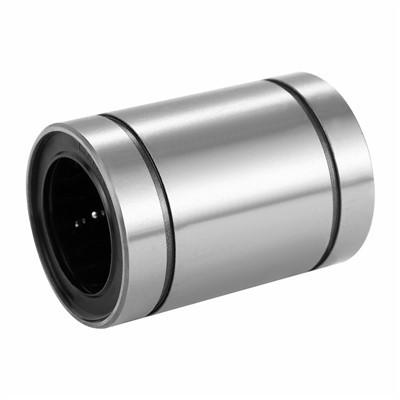
Hey there! As a supplier of flange linear bearings, I often get asked about the shock resistance of these nifty little components. So, let's dive right in and explore what shock resistance really means for flange linear bearings.

First off, what the heck is a flange linear bearing? Well, it's a type of bearing that allows for linear motion along a shaft. The flange part is a flat, protruding edge that helps with mounting the bearing to a surface. These bearings are used in all sorts of applications, from industrial machinery to robotics, and even in some consumer products.
Now, let's talk about shock resistance. In simple terms, shock resistance refers to a bearing's ability to withstand sudden impacts or jolts without getting damaged. When a bearing is subjected to a shock, it experiences a rapid change in force, which can cause wear and tear on the internal components. If the bearing isn't shock-resistant enough, it could fail prematurely, leading to costly downtime and repairs.
So, what factors affect the shock resistance of a flange linear bearing? There are a few key things to consider:
Material Quality
The material used to make the bearing plays a huge role in its shock resistance. High-quality materials, like hardened steel or ceramic, are more likely to withstand shocks than lower-quality materials. For example, a bearing made from hardened steel has a higher hardness and toughness, which means it can better absorb the energy from a shock without deforming or cracking.
Design and Construction
The design of the bearing also matters. A well-designed flange linear bearing will have features that help distribute the shock load evenly across the bearing. For instance, some bearings have a special internal structure that helps absorb and dissipate the energy from a shock. Additionally, the way the bearing is constructed, such as the fit between the inner and outer races, can also affect its shock resistance.
Lubrication
Proper lubrication is essential for maintaining the shock resistance of a flange linear bearing. Lubricant helps reduce friction between the moving parts of the bearing, which in turn reduces the amount of wear and tear caused by shocks. It also helps to dissipate heat, which can further improve the bearing's performance and longevity.
Application Conditions
The conditions under which the bearing is used can also impact its shock resistance. For example, if the bearing is used in an environment with high levels of vibration or shock, it will need to be more shock-resistant than a bearing used in a relatively stable environment. Additionally, the frequency and magnitude of the shocks can also affect the bearing's performance.
Now that we know what affects the shock resistance of a flange linear bearing, let's take a look at some of our products and how they stack up in terms of shock resistance.
One of our popular products is the Flange Linear Bearing LMK20UU. This bearing is made from high-quality materials and has a design that helps distribute the shock load evenly. It's suitable for a wide range of applications, including industrial machinery and automation systems.
Another great option is the Flanged Linear Motion Bearing LMEF20UU. This bearing is designed to provide smooth and reliable linear motion, even in high-shock environments. It has a special internal structure that helps absorb and dissipate the energy from shocks, making it a great choice for applications where shock resistance is crucial.
We also offer the LMH20LUU, which is a high-performance flange linear bearing. This bearing is made from premium materials and has a precision design that ensures excellent shock resistance. It's ideal for applications that require high-speed and high-precision linear motion.

So, how do you choose the right flange linear bearing for your application? Well, it depends on a few factors, such as the load requirements, the operating environment, and the level of shock resistance needed. If you're not sure which bearing is right for you, don't hesitate to reach out to us. Our team of experts is here to help you find the perfect solution for your needs.
In conclusion, the shock resistance of a flange linear bearing is an important factor to consider when choosing a bearing for your application. By understanding the factors that affect shock resistance and choosing a high-quality bearing that is designed to withstand shocks, you can ensure that your equipment runs smoothly and efficiently. If you have any questions or need help selecting the right bearing, please don't hesitate to contact us. We're here to help you make the best decision for your business.
References
- "Bearing Handbook" by SKF
- "Mechanical Design Handbook" by CRC Press