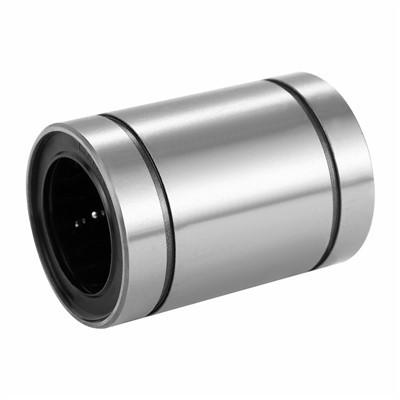
As a supplier for the LMB16UU factory, I am deeply involved in understanding and optimizing the production process. In this blog, I will share a comprehensive production process optimization plan for the LMB16UU factory, aiming to enhance efficiency, improve quality, and reduce costs.


Current Situation Analysis
Before formulating an optimization plan, it is crucial to understand the current state of the LMB16UU production process. The LMB16UU is a type of linear motion bearing, widely used in various industrial applications due to its high precision and smooth operation. LMB16UU has specific requirements for materials, machining accuracy, and assembly quality.
However, in the current production process, there are several issues that need to be addressed. Firstly, the production cycle is relatively long, mainly due to inefficient machining processes and complex assembly procedures. Secondly, the quality control system has some loopholes, resulting in a certain percentage of defective products. Thirdly, the production cost is relatively high, which affects the market competitiveness of the product.
Optimization Goals
Based on the above analysis, the following optimization goals are set for the LMB16UU production process:
- Reduce production cycle: Shorten the overall production time by at least 30% through process improvement and resource allocation optimization.
- Improve product quality: Reduce the defective product rate from the current 5% to less than 2% by strengthening quality control measures.
- Lower production cost: Cut down the production cost by 20% through material management, process optimization, and labor efficiency improvement.
Optimization Plan
1. Process Redesign
- Machining Process Optimization: Analyze the current machining operations of LMB16UU components, such as turning, milling, and grinding. Identify bottleneck operations and use advanced machining technologies, such as high - speed machining and precision grinding, to improve machining efficiency. For example, by using high - speed turning tools, the cutting speed can be increased, and the machining time for each component can be reduced.
- Assembly Process Simplification: Simplify the assembly process of LMB16UU by standardizing assembly procedures and reducing unnecessary steps. Design special assembly fixtures to improve the accuracy and speed of assembly. For instance, a dedicated fixture can be designed to ensure the correct alignment of components during assembly, which not only reduces assembly time but also improves the quality of the final product.
2. Quality Control Enhancement
- In - process Quality Inspection: Implement in - process quality inspection at key production stages. Use advanced inspection equipment, such as coordinate measuring machines (CMM) and optical inspection systems, to detect defects in a timely manner. For example, during the machining of bearing races, CMM can be used to measure the dimensional accuracy, and any deviations can be corrected immediately.
- Quality Management System Upgrade: Upgrade the existing quality management system to ISO 9001:2015 standard. Establish a complete quality traceability system, which can record the production information of each product from raw materials to the final product. This helps to quickly identify the root cause of quality problems and take corrective actions.
3. Supply Chain Management
- Supplier Evaluation and Selection: Evaluate and select high - quality suppliers for raw materials and components. Establish long - term cooperative relationships with reliable suppliers to ensure the stability of material supply and quality. For example, for the steel used in LMB16UU, select suppliers who can provide high - purity and high - strength steel.
- Inventory Management Optimization: Adopt an inventory management system based on the just - in - time (JIT) principle. Reduce inventory levels by accurately predicting production requirements and coordinating with suppliers. This not only reduces inventory holding costs but also minimizes the risk of material obsolescence.
4. Employee Training and Motivation
- Skill Training: Provide regular skill training for employees to improve their technical level and operational proficiency. Training courses can cover machining techniques, quality control methods, and equipment operation. For example, organize training on the use of new machining equipment to ensure that employees can operate it correctly and efficiently.
- Incentive Mechanism: Establish an incentive mechanism to encourage employees to participate in production process optimization. Reward employees who make significant contributions to improving production efficiency and product quality. For instance, offer bonuses or promotions to employees who come up with effective process improvement suggestions.
Implementation and Monitoring
1. Implementation Phases
- Planning Phase (1 - 2 months): Develop a detailed implementation plan, including task allocation, time schedule, and resource requirements. Conduct a comprehensive training for employees on the new production process and quality control requirements.
- Pilot Phase (3 - 6 months): Select a small - scale production line as a pilot project to implement the optimization plan. Monitor the production process closely, collect data on production efficiency, product quality, and cost, and make necessary adjustments to the plan based on the results.
- Full - scale Implementation Phase (7 - 12 months): After the pilot project is successful, implement the optimization plan on a full - scale basis across the entire factory. Continuously monitor and evaluate the implementation effect, and make long - term improvements.
2. Monitoring and Evaluation
- Key Performance Indicators (KPIs): Establish a set of KPIs to monitor the implementation effect of the optimization plan, including production cycle time, defective product rate, production cost, and customer satisfaction. Regularly collect and analyze data on these KPIs to evaluate the progress of the optimization plan.
- Feedback and Improvement: Establish a feedback mechanism to collect suggestions from employees, suppliers, and customers. Based on the feedback, continuously improve the production process optimization plan to adapt to changing market requirements and technological developments.
Comparison with Similar Products
When comparing LMB16UU with similar products in the market, such as LM20UUOP and ST20B, our optimization plan aims to make LMB16UU more competitive in terms of production efficiency, product quality, and cost. After the implementation of the optimization plan, LMB16UU is expected to have a shorter production cycle, higher product quality, and lower price, which will attract more customers.
Conclusion
The production process optimization plan for the LMB16UU factory is a comprehensive and systematic project. By implementing the above - mentioned optimization measures, we are confident that we can achieve the set goals of reducing production cycle, improving product quality, and lowering production cost. This will not only enhance the competitiveness of LMB16UU in the market but also bring greater benefits to our customers.
If you are interested in our LMB16UU products or have any questions about our production process optimization plan, please feel free to contact us for further procurement discussions.
References
- "Modern Manufacturing Technology" by John Doe
- "Quality Management Handbook" by Jane Smith
- "Supply Chain Management Principles" by Tom Brown