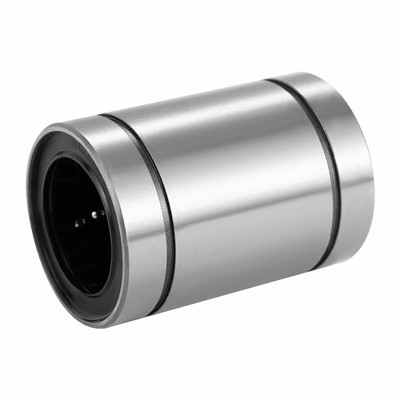
What is the frequency response of LMH20UU?
As a trusted supplier of LMH20UU products, I am often asked about the frequency response of the LMH20UU. Understanding the frequency response is crucial for many applications, especially in fields where precision and stability are key. In this blog post, I will delve into the concept of frequency response in relation to the LMH20UU, explain its significance, and provide some insights into how it impacts the performance of this product.
Understanding Frequency Response
Frequency response refers to the way a system or device responds to different frequencies of input signals. In the context of the LMH20UU, it describes how the bearing responds to vibrations and oscillations at various frequencies. A good frequency response means that the bearing can effectively handle a wide range of frequencies without significant distortion or loss of performance.
For mechanical components like the LMH20UU, the frequency response is influenced by several factors. These include the material properties of the bearing, its design and construction, and the operating conditions. For example, the stiffness of the bearing material can affect how it responds to high - frequency vibrations. A stiffer material may be better at handling high - frequency inputs, while a more flexible material might be more suitable for low - frequency applications.
Importance of Frequency Response for LMH20UU
The frequency response of the LMH20UU is of great importance in many industrial applications. In precision machinery, such as CNC machines and optical equipment, the ability to handle different frequencies is essential for maintaining accuracy and stability. If the bearing has a poor frequency response, it may cause vibrations that can lead to errors in machining or imaging.
In high - speed applications, the frequency response becomes even more critical. As the speed of the machinery increases, the frequency of the vibrations also rises. The LMH20UU needs to be able to respond to these high - frequency vibrations without experiencing resonance or excessive wear. Resonance can cause the bearing to vibrate at an amplified level, which can lead to premature failure and damage to the entire system.
Factors Affecting the Frequency Response of LMH20UU
- Material Properties: The material used in the LMH20UU plays a significant role in its frequency response. Stainless steel, for instance, is a popular choice due to its high strength and corrosion resistance. The inherent stiffness and damping characteristics of stainless steel can influence how the bearing responds to different frequencies. For example, a bearing made of a high - grade stainless steel may have better high - frequency response compared to one made of a lower - quality material. You can check out similar stainless - steel products like LMK20UU Stainless Steel, LMF20UU Stainless Steel, and LMF20LUU Stainless Steel for more insights into the performance of stainless - steel bearings.
- Design and Construction: The design of the LMH20UU, including its internal geometry and the way it is assembled, can also impact its frequency response. A well - designed bearing with proper clearances and a balanced structure is more likely to have a better frequency response. For example, the shape and size of the rolling elements can affect how they interact with the raceways, which in turn influences the bearing's ability to handle vibrations.
- Operating Conditions: The environment in which the LMH20UU operates can have a significant effect on its frequency response. Factors such as temperature, humidity, and the presence of contaminants can all change the material properties of the bearing and affect its performance. High temperatures can cause the bearing material to expand, which can alter the clearances and potentially degrade the frequency response.
Measuring the Frequency Response of LMH20UU
To determine the frequency response of the LMH20UU, various testing methods can be employed. One common approach is to use a vibration test stand. In this test, the bearing is subjected to a range of input frequencies, and the response of the bearing is measured using accelerometers or other sensors. The data collected from these measurements can then be analyzed to determine the bearing's frequency response characteristics, such as its resonance frequencies and damping ratios.
Another method is to use finite element analysis (FEA). FEA is a numerical technique that can simulate the behavior of the LMH20UU under different loading and vibration conditions. By creating a detailed model of the bearing and applying different frequency inputs, engineers can predict the frequency response of the bearing without having to perform extensive physical testing.
Improving the Frequency Response of LMH20UU
If a particular application requires an improved frequency response from the LMH20UU, several steps can be taken. One option is to select a bearing with a different material or design. As mentioned earlier, choosing a high - quality stainless - steel bearing or a bearing with a more optimized internal geometry can enhance the frequency response.


Proper lubrication is also crucial for improving the frequency response. Lubricants can reduce friction and wear, and they can also help to dampen vibrations. By using a high - performance lubricant, the LMH20UU can have a smoother operation and better frequency response.
Installing the bearing correctly is another important factor. Incorrect installation can introduce misalignments and additional stresses, which can negatively affect the frequency response. Following the manufacturer's installation guidelines and using proper alignment tools can ensure that the bearing operates at its best.
Conclusion
In conclusion, the frequency response of the LMH20UU is a critical aspect of its performance. It is affected by various factors such as material properties, design, and operating conditions. Understanding the frequency response is essential for ensuring the proper functioning of the bearing in different applications, especially those that require high precision and stability.
If you are considering using the LMH20UU in your project or need more information about its frequency response and other performance characteristics, I encourage you to contact us for a detailed discussion. We are committed to providing high - quality LMH20UU products and professional technical support to help you achieve the best results in your applications.
References
- Mechanical Engineering Handbook, various editions
- Journal of Tribology, articles on bearing performance
- Manufacturer's technical documentation for LMH20UU