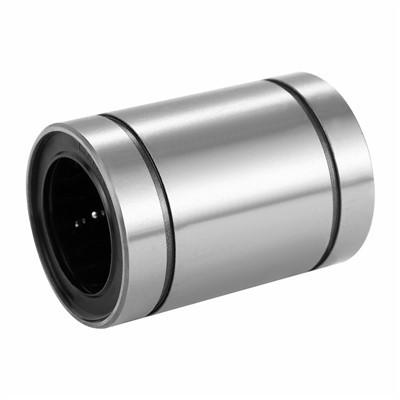
In modern industrial automation, precision motion components are no longer confined to pristine, climate-controlled environments. Across automated chemical processing plants, food sanitization bays, pharmaceutical cleanrooms, and semiconductor etching lines, the standard linear bearing must continuously operate while directly exposed to aggressive chemical media.
When a component encounters corrosive acids, strong alkalis, industrial solvents, or high-pressure chemical washdowns, its material composition dictates whether it will maintain smooth tracking or experience rapid, catastrophic structural breakdown.
For mechanical design engineers and industrial procurement managers, evaluating the chemical resistance of a linear system requires an in-depth chemical and metallurgical analysis. One must examine how specific chemical agents interact with the outer steel cylinder, the internal rolling balls, the plastic recirculation retainer, and the elastomeric double-lip seals.

Metallurgical Analysis of Chemical Resistance
The outer sleeve and precision rolling balls represent the primary load-bearing infrastructure of a linear motion assembly. Selecting the correct metal grade is the first line of defense against chemical attack.
1. High-Carbon Chromium Bearing Steel (GCr15 / 52100)
Standard industrial linear motion bearings are predominantly manufactured from GCr15 bearing steel due to its exceptional core hardness and fatigue resistance. However, from a chemical perspective, GCr15 is highly reactive. It lacks a sufficient chromium concentration to form a passive oxide film.
When exposed to localized moisture, salt spray, weak acids, or even basic alkaline cleaning solutions, the iron within the matrix undergoes rapid oxidation. This results in deep pitting corrosion, which destroys the micron-level finish of the ball pathways, leading to ball skidding, elevated noise, and mechanical binding.
2. Martensitic Stainless Steel (SUS440C)
To achieve substantial chemical resistance without sacrificing the rockwell hardness required to sustain heavy rolling loads, migrating to martensitic stainless steel is the industry standard. SUS440C contains a high concentration of chromium ($16\% \text{ to } 18\%$). This chromium reacts with ambient oxygen to generate a self-healing, microscopic passive layer of chromium oxide ($\text{Cr}_2\text{O}_3$) across all exposed steel boundaries.
This passive shield effectively resists organic acids, mild nitric acid, detergents, and industrial washdown chemicals, ensuring that internal ball loops maintain fluid, low-friction tracking.
3. Austenitic Stainless Steel (SUS304 / SUS316)
In extreme scenarios involving heavy concentrations of highly corrosive sulfuric acid, hydrochloric acid, or marine brine, martensitic stainless steel may still experience localized corrosion. Here, austenitic grades like SUS304 or SUS316 are utilized. Because of their high nickel and molybdenum content, these alloys offer unparalleled chemical immunity.
However, engineers must note that austenitic steels cannot be hardened via heat treatment, resulting in a significantly lower load capacity compared to standard configurations. Therefore, they are strictly reserved for low-load, high-chemical-exposure applications.
Chemical Tolerances of Polymer Retainers and Seals
A linear motion system is a multi-material assembly. Even if the outer steel cylinder survives chemical exposure, the system will fail if the internal plastic ball cage or the external seals dissolve or warp.
Retainer Cage Polymers: POM vs. PA66 vs. PEEK
The internal retainer directs the circulating loops of steel balls through load-bearing tracks and return zones.
- Polyoxymethylene (POM): Standard metric bearings utilize POM due to its low friction and high dimensional stability. POM exhibits excellent resistance to organic solvents, oils, and mild bases. However, it is highly vulnerable to strong mineral acids (like hydrochloric acid) and oxidizing agents, which break down the polymer chains, causing the cage to become brittle and fracture.
- Polyamide 66 (PA66): Commonly utilized for high-temperature configurations, PA66 resists hydrocarbons and alkalis efficiently but absorbs moisture and organic acids, which can induce micro-swelling and restrict free ball recirculation.
- Polyether Ether Ketone (PEEK): For extreme chemical exposure and sterilization zones, premium custom retainers are machined from PEEK. PEEK is chemically inert to almost all organic and inorganic chemicals, maintaining its structural dimensions at temperatures exceeding $200^\circ\text{C}$.
Elastomeric Seals: NBR vs. FMKM (Viton)
The "UU" designation indicates dual-lip contact seals designed to isolate the internal ball tracks from outside contaminants.
- Nitrile Butadiene Rubber (NBR): Standard NBR seals offer exceptional resistance to petroleum-based industrial oils, hydraulic fluids, and alcohols. However, they swell and degrade rapidly when exposed to aromatic hydrocarbons, ozone, or strong halogenated solvents.
- Fluorocarbon Elastomers (Viton / FKM): For chemical processing operations, upgrading the seals to Viton is critical. Viton withstands aggressive mineral acids, chlorinated solvents, and highly concentrated chemical washdown vapors, protecting the internal specialized grease from contamination.
Advanced Factory Coatings as a Corrosion Shield
When structural load profiles necessitate the intense mechanical strength of GCr15 carbon steel, but the operating zone features continuous chemical vapor exposure, specialized advanced surface treatments can be executed on the manufacturing floor.
- Raydent Plating: This low-temperature electrochemical treatment integrates an ultra-thin, highly adherent black chrome barrier directly into the steel substrate. Unlike standard electroplating, Raydent does not flake or chip off under continuous stress and maintains an incredibly uniform thickness, preserving the strict micron-level tolerances required for high-precision tracking.
- Electroless Nickel Plating: This autocatalytic chemical deposition applies a uniform layer of nickel-phosphorus alloy over every complex curve and internal raceway of the bearing sleeve. The resulting amorphous surface is highly resistant to chemical pitting, alkaline solutions, and abrasive wear.
Architectural Compatibility across Diverse Formats
Industrial frameworks utilize varying standards and geometries depending on regional machine criteria and spatial constraints.
Standard Cylindrical Versus Integrated Flange Models
Whether utilizing a standard cylindrical setup or an integrated square flanged model like the LMEK20UU, the chemical resistance parameters remain dependent on the chosen material metallurgy and polymer options. However, flanged designs provide an engineering advantage in washdown environments. Because the flange bolts directly against a mounting wall, it minimizes the presence of open external crevices where corrosive chemical residues can accumulate and sit during stagnant periods.
Metric Systems Versus Inch-Standard Variations
In international chemical and food processing equipment, metric standard components are highly preferred over regional inch-standard alternatives. The massive global manufacturing volume of metric-series stainless steel components ensures a highly streamlined and cost-effective procurement pipeline, allowing engineering departments to easily swap components during routine overhaul windows anywhere in the world.

Manufacturing Excellence and Structural Reliability: The SQ Standard
Sourcing linear motion components destined for chemically aggressive environments demands a manufacturer capable of enforcing flawless quality controls and tight dimensional tracking. Microscopic surface imperfections accelerate localized chemical pitting.
Zhejiang Siqiang Bearing Manufacturing Co., Ltd. (SQ) is an industry-leading high-tech enterprise established in 2007 and holds the position of Vice President unit of the Lishui Rolling Functional Components Association. Operating from a highly advanced 19,800-square-meter modern manufacturing workshop equipped with more than 100 premium CNC units, automated grinding lines, and precision testing centers, SQ maintains strict adherence to the ISO9001 quality management system.
Our rigorous testing protocols eliminate geometric deviations, ensuring that every stainless steel bearing, linear guide assembly, and matching ball screw matches strict metric standards. For global B2B procurement managers and Tier 1 automated machinery builders, we provide fully customizable engineering solutions, including custom brand logos, specialized chemical-resistant packaging, and tailored anti-corrosion surface coatings designed to survive extreme industrial processing environments.
Proactive Maintenance and Lubrication Safeguards
Operating precision rolling elements within chemical fields requires a rigorous preventative maintenance protocol to maximize component service life.
- Deploy Chemical-Inert Synthetic Grease: Standard industrial grease breaks down almost instantly when exposed to acids or chemical solvents. Technicians must pack the internal bearing cavities with specialized fluorinated lubricants (PFPE/PTFE). These lubricants are chemically inert, do not react with aggressive chemicals, and resist being dissolved by powerful industrial solvents.
- Calibrated Interval Flushing: Establish a automated or manual lubrication interval to regularly inject fresh grease through the mounting blocks. This continuous positive pressure helps push out any chemical vapors or fluids that have managed to migrate past the rubber dual-lip seals before they can attack the metal sub-layers.
- Shaft Surface Matching: The linear bearing must track along a shaft that exhibits identical or superior chemical resistance. Pairing a stainless steel bearing with a standard carbon steel shaft will cause intense galvanic corrosion at the contact points, rapidly destroying the entire light linear guide assembly.
Conclusion: Balancing Metallurgy and Chemical Reality
In conclusion, the chemical resistance of a linear motion bearing is not a fixed attribute, but a variable equation controlled by material engineering. While baseline carbon steel units will succumb to rapid chemical pitting and corrosion-induced failure, choosing advanced configurations transforms the system's longevity.
By strategically pairing high-grade SUS440C martensitic stainless steel with PEEK retainers, chemical-inert Viton seals, and hydrophobic fluorinated lubricants, industrial operators can confidently implement precision linear tracking across the most aggressive chemical processing environments on earth.
Need Official CAD Outlines or Custom Material Specifications? Contact SQ's Technical Consultation Department today to receive official metallurgical test sheets, chemical compatibility charts, and competitive factory-direct volume quotes for your automation infrastructure.