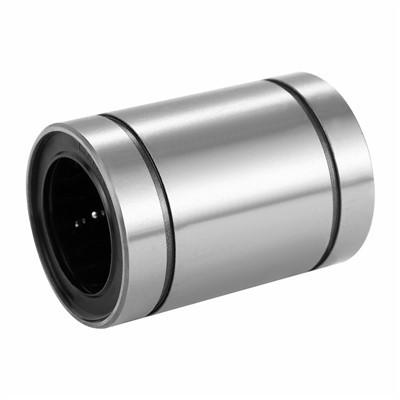
As a supplier with LMH20UU in stock, I'm often asked about how this product responds to different loads. Understanding the load - handling capabilities of the LMH20UU is crucial for customers in various industries, as it directly impacts the performance and longevity of their equipment. In this blog, I'll delve into the details of how the LMH20UU reacts to different loads, drawing on my experience and knowledge as a supplier.
Static Load Capacity
The static load capacity of the LMH20UU is an important factor to consider. Static load refers to the load that the bearing can withstand when it is not in motion. The LMH20UU is designed to handle a certain amount of static load without permanent deformation. This is determined by the material properties of the bearing, such as the hardness of the raceway and the balls, as well as the internal structure of the bearing.
When a static load is applied to the LMH20UU, the balls and the raceway come into contact. If the load is within the rated static load capacity, the contact stress is distributed evenly across the contact area. The bearing's internal structure is engineered to maintain its shape and integrity under such loads. This ensures that when the equipment is at rest, the LMH20UU can support the weight of the components without any issues. For example, in a stationary machine where the LMH20UU is used to support a heavy platform, as long as the weight of the platform is within the static load capacity of the bearing, the bearing will remain in good condition.
However, if the static load exceeds the rated capacity, the contact stress becomes too high. This can lead to permanent deformation of the raceway or the balls. Once deformation occurs, the smooth operation of the bearing is compromised. The bearing may start to make noise, and its ability to handle dynamic loads will also be reduced. Therefore, it's essential for customers to accurately calculate the static load on the LMH20UU in their applications and ensure that it is within the rated capacity.
Dynamic Load Capacity
Dynamic load capacity is another key aspect when it comes to the LMH20UU's performance. Dynamic load refers to the load that the bearing experiences when it is in motion. In real - world applications, the LMH20UU is often used in systems where there is continuous movement, such as linear motion systems.
When the LMH20UU is subjected to dynamic loads, the balls are constantly rolling along the raceway. The dynamic load capacity is determined by factors such as the speed of rotation, the type of load (radial or axial), and the lubrication condition. A higher dynamic load capacity means that the bearing can handle more force while in motion without premature wear or failure.
For radial dynamic loads, the LMH20UU is designed to distribute the load evenly around the circumference of the bearing. The internal geometry of the bearing ensures that the balls roll smoothly and transfer the load efficiently. In applications where there is a high - speed linear motion with a significant radial load, such as in a CNC machine's linear guide system, the LMH20UU's ability to handle dynamic radial loads is crucial. If the dynamic radial load exceeds the rated capacity, the balls may experience excessive wear, and the raceway may develop fatigue cracks over time.
Axial dynamic loads are also a consideration. In some applications, there may be forces acting parallel to the axis of the bearing. The LMH20UU has a certain capacity to handle axial dynamic loads. When an axial load is applied, the bearing's internal structure needs to transfer this load without causing misalignment or excessive stress on the components. For example, in a conveyor system where there is a slight axial thrust due to the movement of the conveyor belt, the LMH20UU must be able to handle this load while maintaining its smooth operation.


Impact of Different Load Types
In addition to static and dynamic loads, the type of load also affects the LMH20UU's performance. There are different types of loads, such as constant loads, variable loads, and shock loads.
Constant loads are relatively straightforward. When the LMH20UU is subjected to a constant load, whether it is static or dynamic, the bearing operates under a stable set of conditions. As long as the load is within the rated capacity, the bearing can perform consistently over a long period. For example, in a simple linear motion system where a constant force is applied to move a component at a steady speed, the LMH20UU can handle this load without significant issues.
Variable loads, on the other hand, pose more challenges. A variable load means that the magnitude or direction of the load changes over time. This can cause the bearing to experience different levels of stress at different moments. The LMH20UU needs to adapt to these changes. In applications where the load varies, such as in a robotic arm that moves in different directions and with different forces, the bearing's ability to handle variable loads is crucial. The internal structure of the LMH20UU is designed to some extent to accommodate these variations, but it's still important to ensure that the maximum load does not exceed the rated capacity.
Shock loads are the most severe type of load. A shock load is a sudden and intense force applied to the bearing. This can occur due to impacts, sudden stops, or starts in the equipment. The LMH20UU has a limited ability to handle shock loads. When a shock load occurs, the high - intensity force can cause immediate damage to the bearing. It can lead to cracking of the raceway, deformation of the balls, or even breakage of the bearing components. In applications where shock loads are likely to occur, additional measures such as shock absorbers may be required to protect the LMH20UU.
Influence of Load on Lubrication
The load on the LMH20UU also has an impact on lubrication. Lubrication is essential for reducing friction and wear in the bearing. When the load is high, the contact pressure between the balls and the raceway increases. This can squeeze out the lubricant film more easily.
Under normal load conditions, the lubricant forms a thin film between the moving parts of the bearing. This film reduces friction and prevents direct metal - to - metal contact. However, when the load is excessive, the lubricant film may break down. Once the film breaks down, the friction increases significantly, leading to more wear and heat generation.
To ensure proper lubrication under different loads, it's important to choose the right type of lubricant. For high - load applications, a lubricant with a higher viscosity may be required. A high - viscosity lubricant can better withstand the pressure and maintain the lubricant film. Regular lubrication maintenance is also crucial. Customers should follow the recommended lubrication intervals and ensure that the correct amount of lubricant is applied.
Comparison with Similar Products
When considering the LMH20UU's response to different loads, it's also useful to compare it with similar products in the market. For example, the Flange Linear Bearing LMK20UU and the LMEK20UU are also flange linear bearings.
The LMH20UU has its own unique design and material properties that give it specific load - handling capabilities. Compared to the LMK20UU, the LMH20UU may have different internal geometries that affect how it distributes loads. The LMEK20UU, on the other hand, may be designed for different application scenarios, and its load - handling characteristics may vary accordingly.
The LMH20UU Nickel Plating version offers additional corrosion resistance, which can be beneficial in applications where the bearing is exposed to harsh environments. The nickel plating may also have a slight impact on the bearing's load - handling performance due to the change in surface properties.
Conclusion
In conclusion, the LMH20UU's response to different loads is a complex but well - engineered process. Understanding its static and dynamic load capacities, as well as how it reacts to different load types, is essential for customers to ensure the proper functioning of their equipment. As a supplier with LMH20UU in stock, I'm committed to providing customers with the necessary information and support to make the right choices for their applications.
If you are in need of LMH20UU bearings for your projects and want to discuss your specific load requirements, I encourage you to reach out for a procurement discussion. I can offer detailed technical advice and help you select the most suitable products for your needs.
References
- Bearing Design Handbook, published by a leading bearing industry association.
- Technical papers on linear bearing performance under different loads from academic journals.