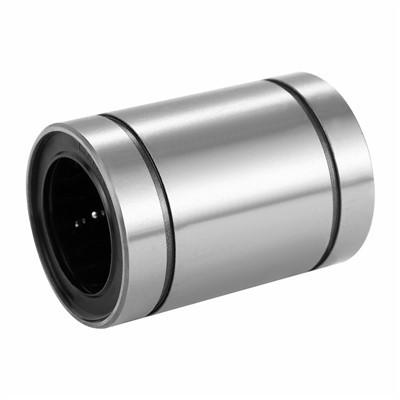
In the modern landscape of high-velocity industrial automation, heavy material handling, and multi-axis robotics, system safety is a primary engineering benchmark. When senior mechanical hardware designers and plant safety inspectors ask about the "safety features" of an internal component like the LMH20UU, they are analyzing the component's structural fail-safe capabilities, its rated tolerance against catastrophic mechanical overloads, its resistance to fatigue failure, and its capacity to prevent unexpected equipment lockups during operation.

1. Structural Retention and Geometric Shock Mitigation
The key safety driver of the LMH20UU is the "H" suffix (Oval Flange Layout). In standard unflanged linear sleeves, axial retention depends entirely on external housing friction or thin internal snap rings. Under high-acceleration stroke reversals, these friction fits can fail, causing the bearing sleeve to migrate out of its carrier block.
The integrated oval flange of the LMH20UU provides Positive Axial Retention:
- Rigid Mounting: The steel flange bolts directly flat against the structural face of the machine carriage via two precision-machined counterbored mounting holes.
- Deceleration Security: This direct bolting eliminates the possibility of axial migration under high-impact deceleration loads (>30m/s2).
- Inertia Optimization: The trimmed two-sided flat flange shape reduces side width to just 38mm. This modification removes excess outer material, decreasing the overhang mass of the moving carriage and lowering system kinetic inertia during high-speed travel.
2. Dynamic Fail-Safe Mechanisms and Load Limits
Operational safety inside a heavy machinery framework requires managing the structural fatigue limits of high-carbon steel components. The internal ball tracks of the LMH20UU are engineered to manage localized stresses through specific material selections and load parameters.
- Mechanical Fail-Safe Principle: High Shock Force / Overload Event → Absorbed by Rigid GCr15 Casing Matrix → System Damage Prevented via Controlled Plastic Deformation.
- High-Carbon Chromium Steel (GCr15) Shell: The outer cylindrical sleeve is manufactured from premium-grade GCr15 bearing steel, induction-hardened to a uniform rating of HRC60-64. This prevents microscopic track spalling under intense localized stress.
- Controlled Fracture: The core of the steel housing maintains optimal structural toughness. If the axis encounters an unexpected physical obstruction, the bearing casing is engineered to undergo controlled deformation rather than brittle fracture, containing mechanical failure safely inside the housing block.
3. Component Layouts for Lean Applications
Depending on the spatial constraints, direction of moment loads, and environmental demands, engineers select specific configurations from the 20mm metric family:
- Symmetrical Square Flanges (LMK Series): When mounting directly to a flat vertical face inside heavy-duty Cartesian setups, models like the LMK20UU utilize a wider square flange base secured by four mounting bolts.
- Extended-Body Double Retainers: For machine carriages subjected to intense cantilevered moment forces, standard-length components can experience localized edge binding. Upgrading to a long-body configuration like the LMH20LUU places two independent ball retainers in tandem inside an extended 80mm sleeve, doubling the operational load rating.
- Corrosion-Resistant Surface Passivations: For harsh environments exposed to moisture or chemical cleaners, specifying a specialized stainless steel line or utilizing a molecular-bonded Nickel Plating barrier protects the steel components from chemical corrosion.

4. Advanced Contamination Containment
The primary cause of premature mechanical failure in automated machinery is the ingress of abrasive environmental particulates. The LMH20UU incorporates advanced contamination containment to safeguard its rolling components:
- Dual-Lip Nitrile Rubber Contact Seals (The "UU" Protocol): The trailing UU suffix indicates the factory integration of dual-lip nitrile butadiene rubber (NBR) wiping seals. These are engineered with an optimized elastic inward preload that maintains continuous contact around the circumference of the 20mm linear shaft.
- Double-Barrier Function: The outer wiper lip blocks fine abrasive dust, metallic chips, and manufacturing soot, while the inner sealing lip acts as a fluid barrier, preventing internal lubricating greases from leaking.
- Sound Dampening: To prevent high-frequency ball-to-ball impact noise during high-velocity recirculation cycles, the internal tracks are housed within a precision-molded synthetic resin retainer cage, lowering operational noise levels below 45 dB.
5. Manufacturing Precision and SQ Reliability
The ultimate safety of a linear axis depends directly on the geometric uniformity achieved on the factory floor. Minor manufacturing defects can create localized stress concentrations, leading to unpredictable fatigue failure.
Zhejiang Siqiang Bearing Manufacturing Co., Ltd. (SQ) maintains strict compliance with the ISO9001 quality management system, operating out of a 19,800-square-meter modern facility. Our specialized raw-material tracking and automated micro-grinding lines eliminate microscopic surface variations, ensuring that every LMH20UU component, precision ball screw, and hardened linear shaft matches international standard tolerances perfectly.
Need Engineering Blueprints or Custom Material Proposals? Contact SQ's Technical Application Engineering Team today to receive official product CAD models, mounting tolerance sheets, and factory-direct volume quotes tailored to your production requirements.